
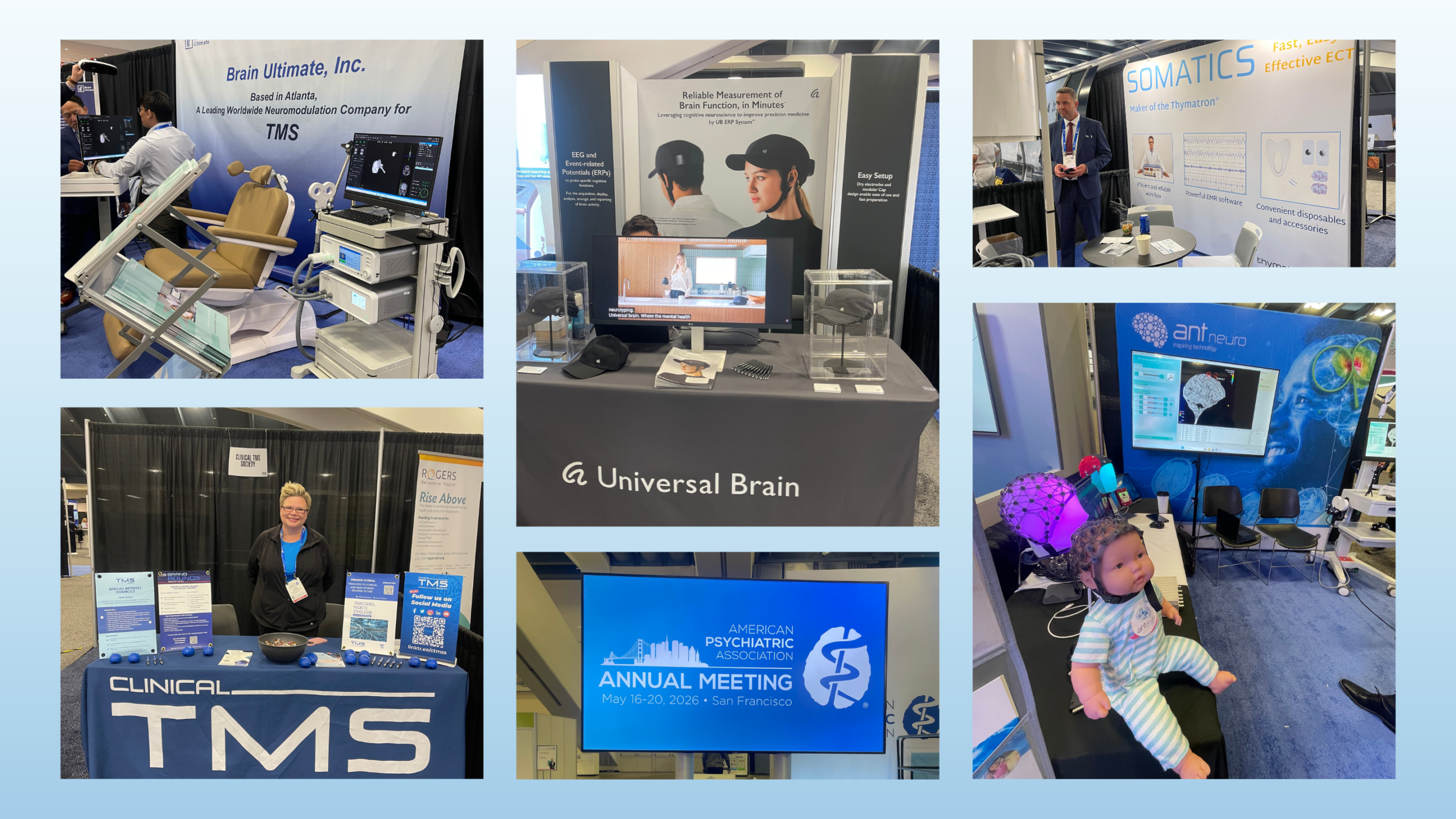
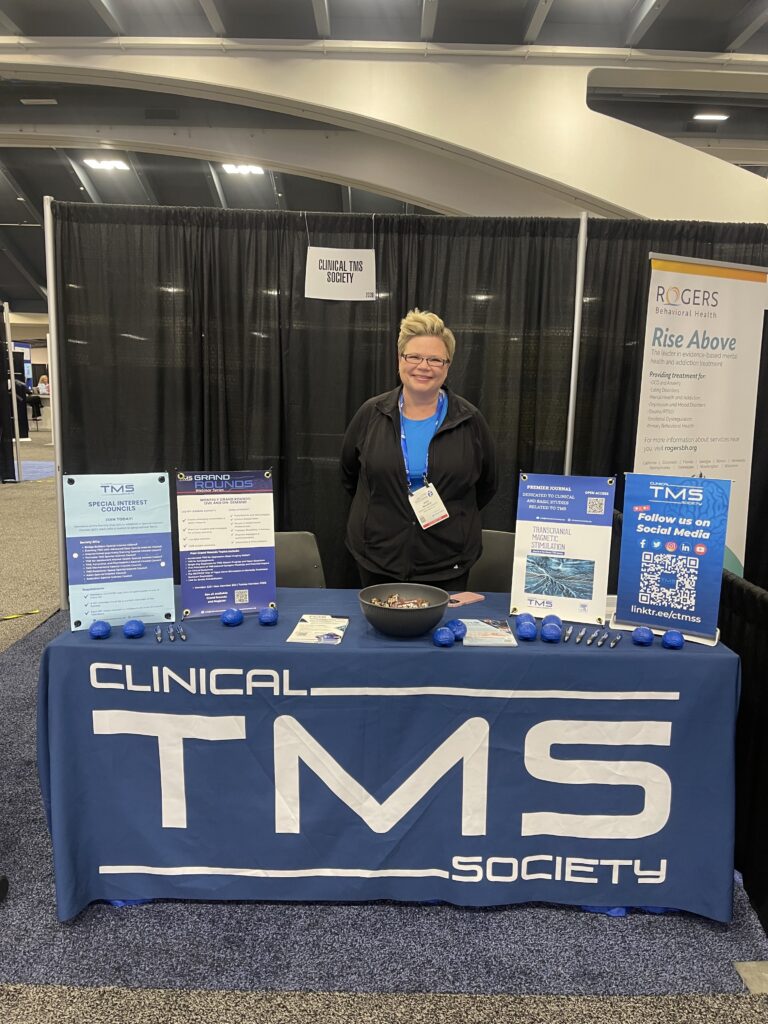
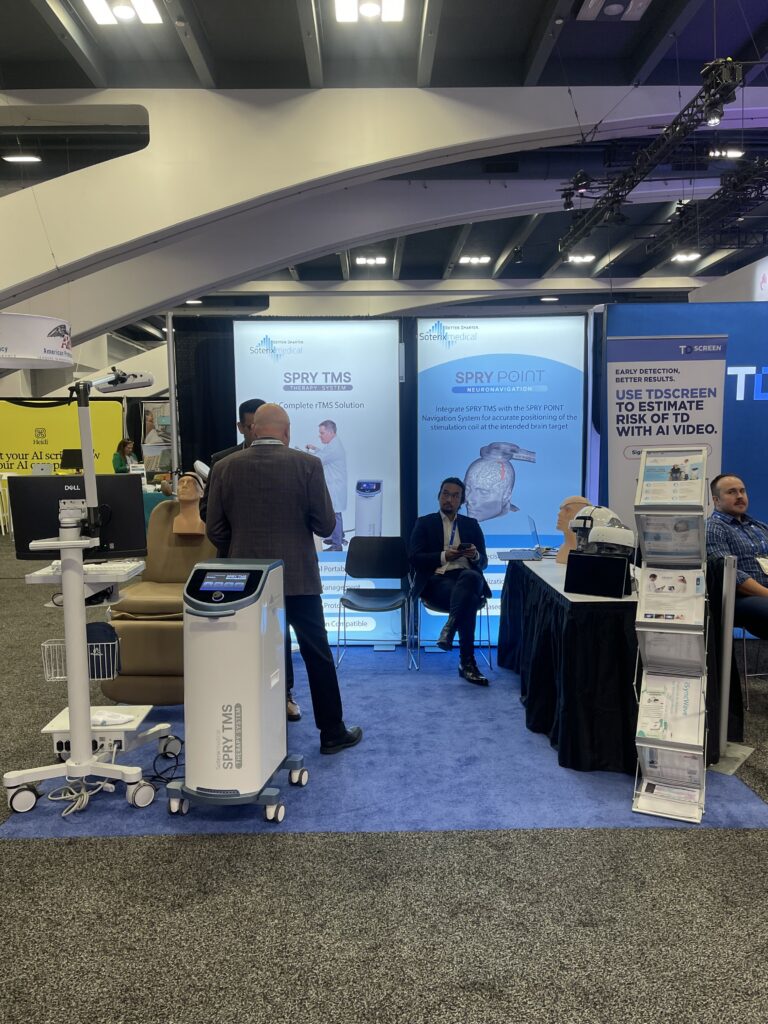
Walking the exhibit hall on day one of the APA Annual Meeting 2026, one thing became immediately obvious: interventional psychiatry is getting harder to ignore.
Not long ago, TMS and neuromodulation felt like niche corners of psychiatry conferences — interesting, promising, but still somewhat separated from mainstream psychiatric practice. This year felt different.
The technologies were bigger. The booths were bigger. The conversations were more sophisticated. And maybe most importantly, there seemed to be less energy spent convincing people these treatments matter — and more energy focused on how to optimize, personalize, and scale them.
You could feel the field evolving in real time.
One of the first things that stood out was how much of the conference floor was centered around brain circuitry, neuroimaging, neuromodulation, and precision psychiatry. Entire sections of the bookstore were dedicated to topics like TMS, brain signaling, neuropsychiatry, epigenetics, and circuit-based models of psychiatric illness.
Honestly, just seeing Transcranial Magnetic Stimulation: Clinical Applications for Psychiatric Practice prominently displayed alongside broader psychiatry and neuroscience texts felt symbolic of where the field is now. TMS no longer feels like the “new weird thing” at APA. It increasingly feels like part of the larger psychiatric infrastructure.
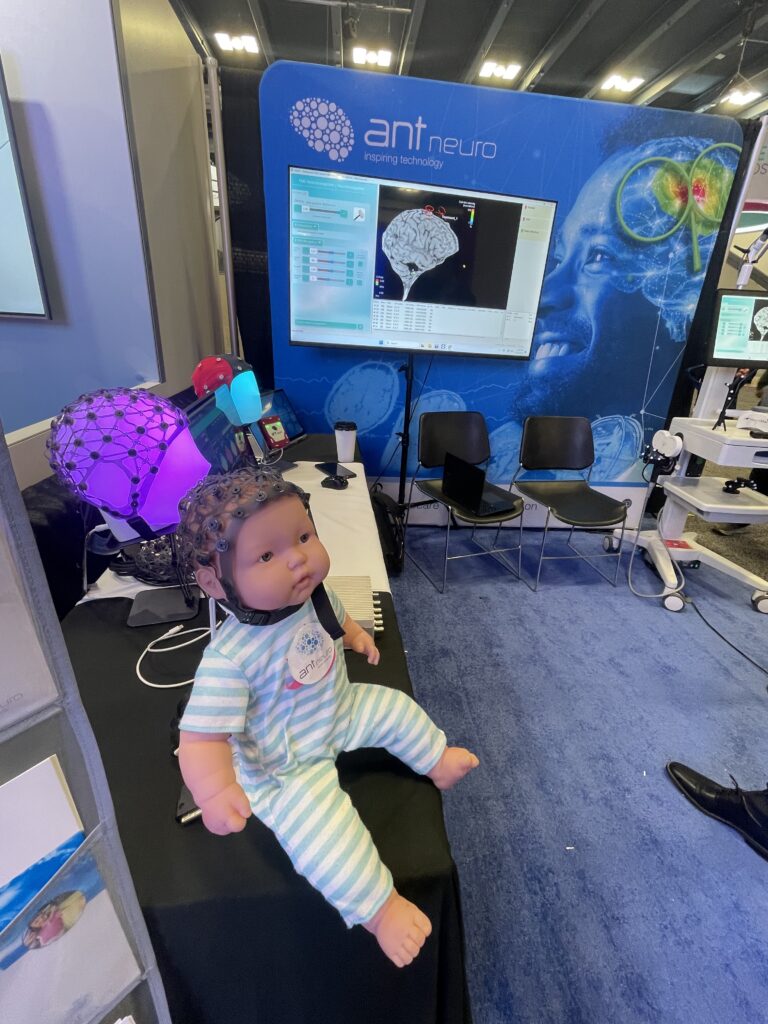
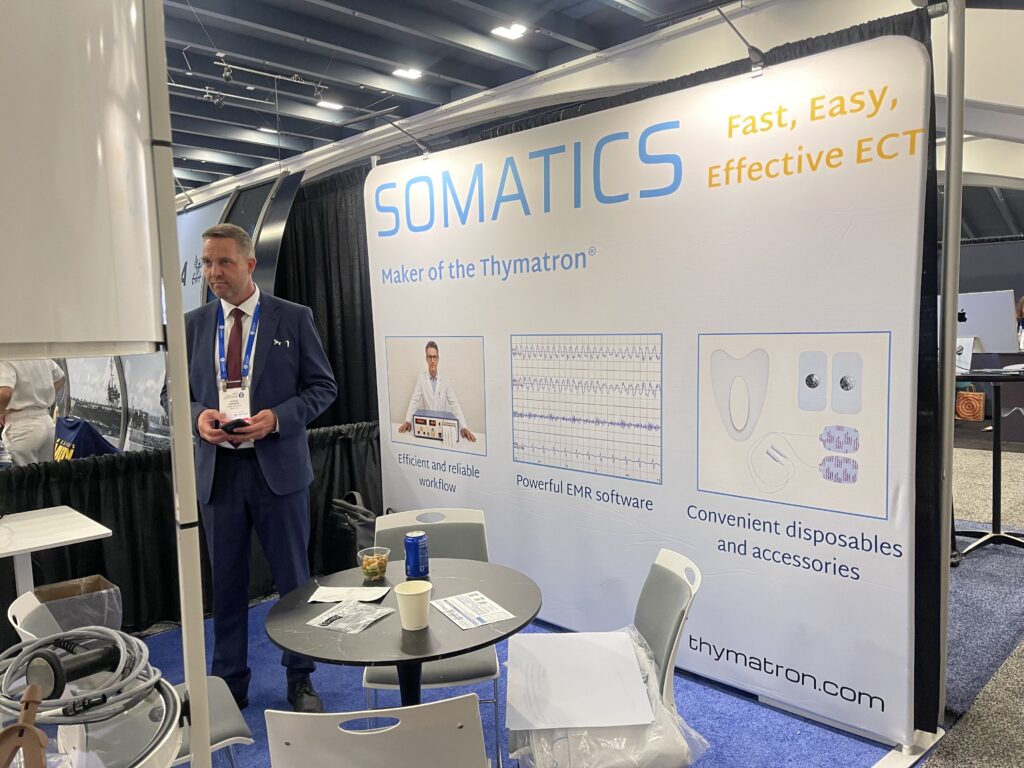
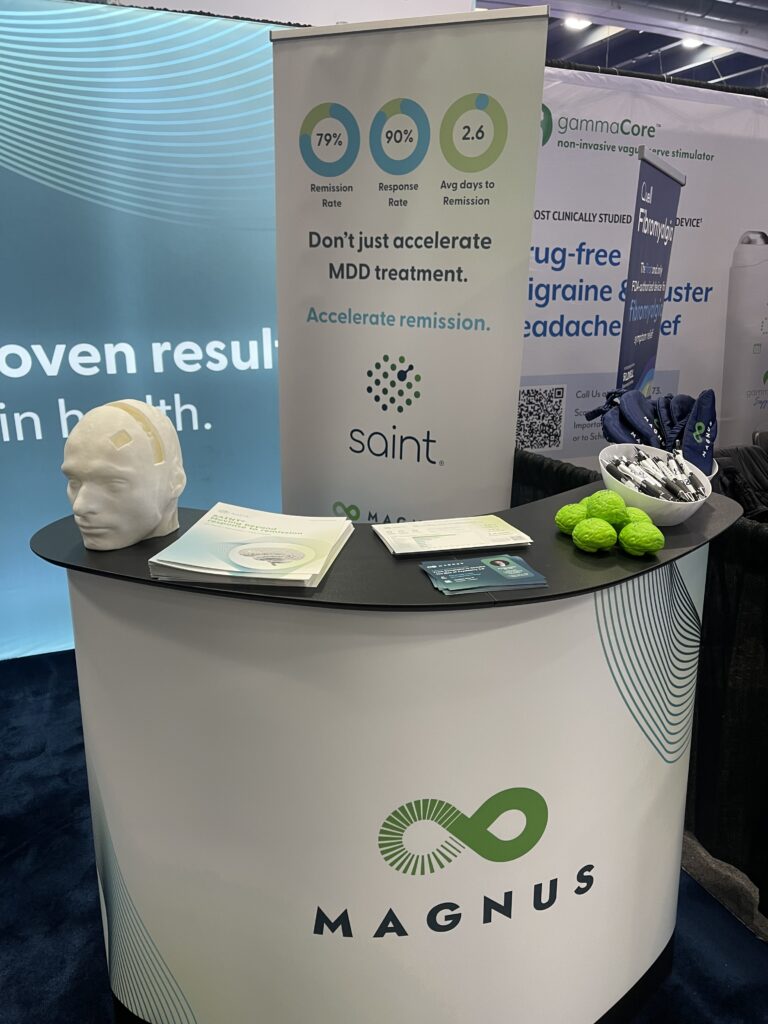
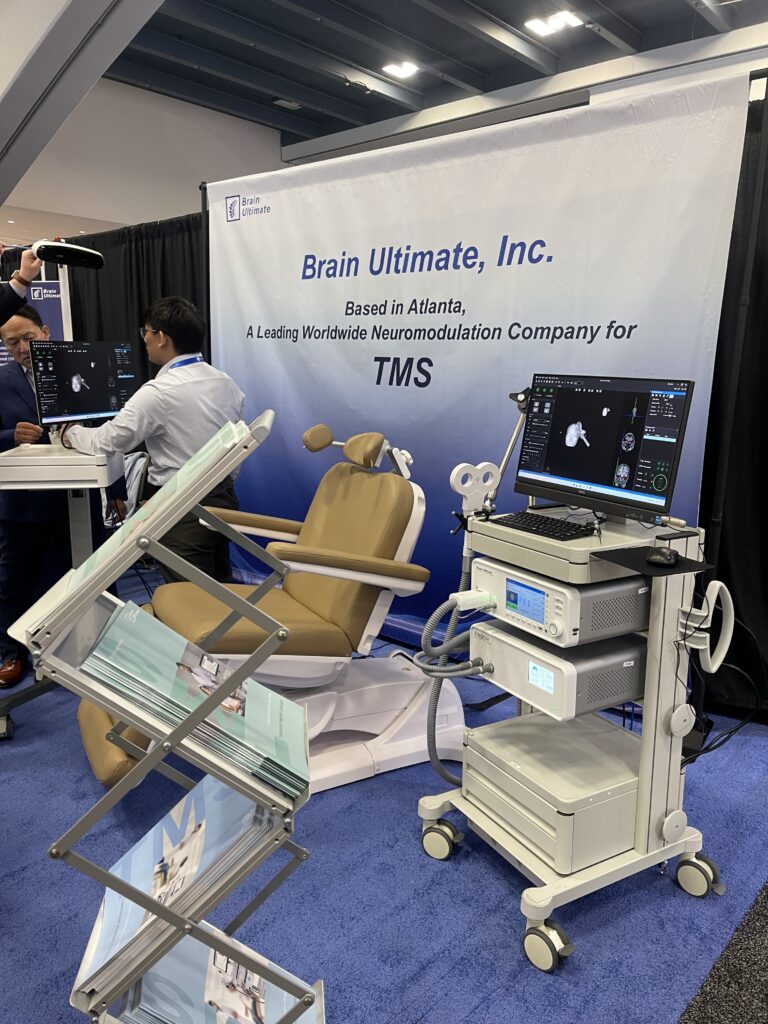
Walking through the neuromodulation booths, there was also a noticeable shift in messaging.
A few years ago, most companies were still heavily focused on simply explaining what TMS was. Now the conversations are moving toward workflow efficiency, individualized targeting, biomarker integration, accelerated protocols, neuronavigation, and treatment optimization.
That’s a very different stage of market maturity.
SEBERS Medical showcased the TMS-Pilot system and Blossom ecosystem with a heavy emphasis on usability and simplifying clinical workflows. Other companies leaned hard into targeting technologies and navigation systems.
Brain Ultimate, for example, drew a lot of attention with MRI-guided neuronavigation integrated directly into TMS workflows.
And that may quietly be one of the biggest themes emerging in interventional psychiatry right now:
The future may not simply belong to whoever has a TMS device.
It may belong to whoever can best combine targeting, workflow, personalization, data collection, and measurable outcomes into a coherent clinical system.
That theme kept showing up throughout the day.
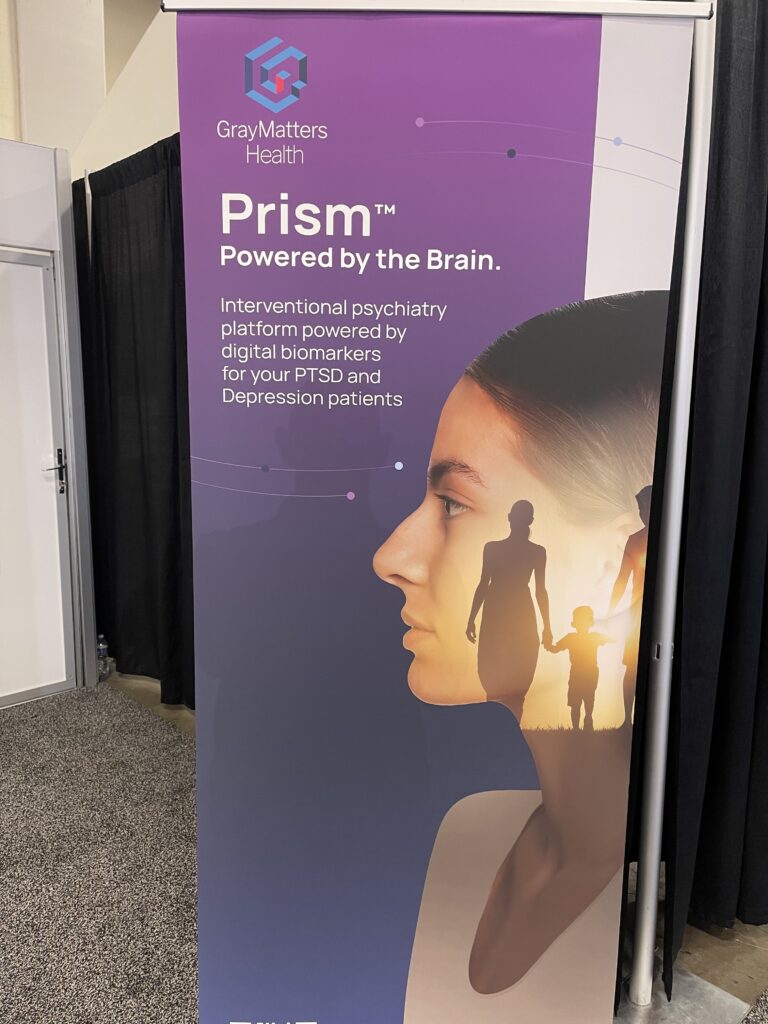
GrayMatters Health presented its Prism platform focused on digital biomarkers for PTSD and depression. Multiple companies were talking about objective measurements, adaptive systems, AI-assisted interpretation, and circuit-informed treatment approaches.
There also seemed to be growing interest in non-invasive neuromodulation beyond traditional TMS. Devices like gammaCore highlighted how the broader “brain stimulation” ecosystem is continuing to expand into vagus nerve stimulation and autonomic nervous system modulation.
At the same time, there was a noticeable split emerging between companies focused on evidence-based psychiatric treatment and companies drifting more toward wellness, optimization, and consumer neurotechnology language.
That distinction matters.
Because while the excitement around neuroscience is real, the field is also entering a phase where clinicians will increasingly need to separate solid evidence from futuristic marketing narratives.
Still, the overall momentum around interventional psychiatry was hard to miss.
And honestly, one of the most interesting parts wasn’t even the technology itself — it was the people around it.
The booths weren’t empty curiosity stations. Psychiatrists were engaged. Clinic owners were asking operational questions. Providers were talking about implementation, reimbursement, staffing, protocols, and patient throughput. Those are not “Is this real?” conversations anymore. Those are “How do we build this into modern psychiatric practice?” conversations.
That’s a major shift.
Day one of APA 2026 felt less like watching an emerging niche and more like watching a specialty mature.
Interventional psychiatry still has real challenges ahead — reimbursement limitations, evidence gaps in certain indications, commercialization pressures, and the growing tension between innovation and hype.
But walking the floor this year, it genuinely felt like the field is moving from the experimental era into something much larger.
And the companies investing heavily into neuromodulation, biomarkers, targeting systems, and precision psychiatry clearly believe the next decade of psychiatry may look very different from the last one.
