
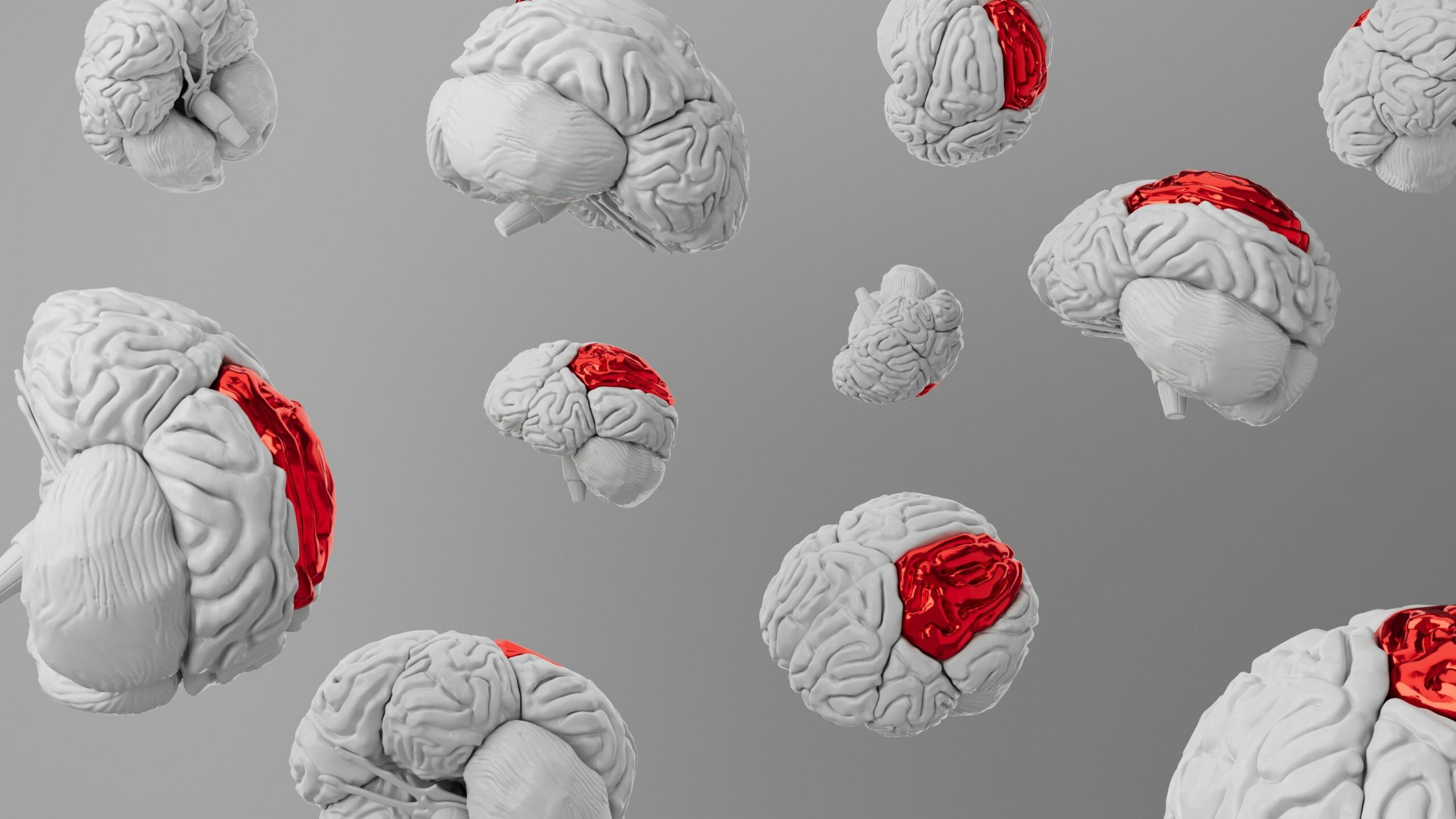
The ability to recognize whether we are truly in control of our own actions is something most people rarely think about. Yet according to recent interventional psychiatry research, carefully targeted brain stimulation may temporarily strengthen or weaken this fundamental experience. The findings offer another example of how advances in neuroscience continue to expand the possibilities for future brain-based therapies.
Every movement we make relies on a continuous comparison between what the brain expects to happen and what our senses actually report. Most of the time these predictions align perfectly, allowing actions to feel effortless and intentional. When they do not, the brain quickly recognizes that something unexpected has occurred.
Why The Brain’s Sense Of Agency Matters
Scientists refer to this experience as the “sense of agency,” or the feeling that we are the source of our own actions. This process is essential for everyday behavior, from reaching for a cup of coffee to driving a car.
Previous neuroimaging studies have consistently pointed toward the right inferior parietal lobule as an important region involved in detecting mismatches between intended and observed movement. While imaging studies can reveal associations, they cannot determine whether that brain region directly causes the experience itself.
That question motivated researchers to test whether changing local brain activity could directly influence this perception.
Brain Wave Stimulation Put To The Test
The investigators recruited healthy adult volunteers who completed a computerized cursor navigation task. Participants believed researchers would occasionally interfere with their cursor movements remotely. Instead, an algorithm subtly altered cursor trajectories at random moments.
Participants were asked to identify whenever they believed the cursor no longer reflected their intended movement.
To manipulate neural activity, researchers used two noninvasive stimulation techniques.
The first was transcranial alternating current stimulation (tACS), which delivers weak electrical currents through scalp electrodes to encourage neurons to synchronize at specific frequencies. The second was repetitive transcranial magnetic stimulation (rTMS), which uses magnetic pulses to temporarily disrupt activity within a targeted brain region.
Both techniques focused on the same location: the right inferior parietal lobule.
Brain Wave Stimulation Improved And Disrupted Detection
The results showed that stimulation produced measurable changes in perception.
When participants received high frequency electrical stimulation using tACS, they became significantly better at recognizing when the computer altered their movements. Their internal monitoring system appeared more sensitive to detecting external interference.
In contrast, temporary disruption of the same brain region using rTMS reduced participants’ ability to detect those mismatches.
Together, these findings provide causal evidence that activity within this brain region contributes directly to the human sense of agency rather than simply accompanying it.
Understanding The Brain Mechanism Behind Brain Wave Stimulation
The brain constantly generates predictions before every voluntary movement.
Motor regions issue commands to muscles while simultaneously sending an internal copy of those commands to sensory processing networks. This allows incoming visual and physical feedback to be compared against expected outcomes within fractions of a second.
When both signals match, the brain confirms that the action belongs to the individual. When differences emerge, specialized networks detect the mismatch and generate the feeling that something external has influenced the movement.
The new study suggests that modifying synchronized brain wave activity within these circuits can temporarily adjust the sensitivity of this monitoring system.
Rather than changing movement itself, stimulation appears to change how accurately the brain evaluates ownership of the movement.
What Makes This Research Distinct
Many previous studies have identified correlations between brain activity and cognitive processes.
This investigation moved beyond observation by experimentally increasing and decreasing neural activity to demonstrate direct effects on behavior. Using two complementary stimulation techniques strengthened the evidence that the targeted brain region plays an active role in monitoring self-generated actions.
The work also illustrates how brain oscillations may serve as functional mechanisms rather than simply reflecting ongoing brain activity.
What It Could Mean For Interventional Psychiatry
Although this research involved healthy volunteers and should not be interpreted as an immediate clinical application, it highlights an important principle in modern neuroscience.
Understanding how specific brain rhythms influence perception, self-awareness, and cognitive control may help researchers refine future neuromodulation approaches. Technologies such as TMS and other emerging stimulation methods increasingly aim to target neural circuits with greater precision rather than broadly affecting brain function.
As scientists continue to map these relationships, studies like this help build the foundation for more personalized interventions that could eventually improve symptoms involving disrupted self-monitoring or impaired cognitive processing.
While much more research remains necessary before these findings translate into clinical practice, they represent another step toward understanding how carefully modulating brain activity may influence some of our most fundamental human experiences.
Citations
Roohi-Azizi M, et al. Changes of the Brain’s Bioelectrical Activity in Cognition, Consciousness, and Some Mental Disorders. https://pmc.ncbi.nlm.nih.gov/articles/PMC5804435/
