
SPONSORED CONTENT
Don Vaughn, PhD, Co-founder and CEO, Ampa
If you practice interventional psychiatry, you already know the paradox: transcranial magnetic stimulation (TMS) is an established treatment for major depressive disorder, supported by nearly two decades of clinical use and a substantial body of evidence. Yet, fewer than 1% of patients who may be eligible for TMS ever receive it.
The problem is increasingly not whether we have a clinically-proven intervention, but rather whether we have built a treatment model that works for the people delivering, and receiving, it.
As physicians, you want to give your patients more options, particularly when conventional approaches haven’t provided the relief you hoped for. But you also have to make those treatments work in the real world. You have a practice to run, a team to manage, rooms to schedule, and economics to consider. Those realities aren’t separate from patient care; they’re a fundamental part of patient access.
As our understanding of neuropsychiatry evolves, that distinction becomes increasingly important. Neuroscience is revealing how networks involved in emotional regulation, cognitive control and resilience can become disrupted, and how targeted interventions can engage those circuits and harness neuroplasticity.
In fact, a recent editorial in the American Journal of Psychiatry highlights TMS as an important example of this progress, pointing to how advances in our understanding of brain circuits are helping us think more precisely about where and how stimulation can be used therapeutically.
As TMS evolves, the way we deliver it should also evolve alongside it.
Why a better treatment model is necessary
The traditional TMS treatment model comes with significant barriers for patients and clinicians alike. For patients, conventional TMS can mean five visits a week for several weeks. In a 2026 study of patients undergoing a standard six-week course of TMS, the most commonly reported barriers included transportation, time and scheduling demands, cost and insurance concerns, with patients also describing the disruptive impact of treatment frequency and the logistical and financial planning required.
For clinicians, the equation is different but equally consequential: traditional TMS systems can require dedicated space, extensive training, and significant upfront equipment expenditure. Practices have to build infrastructure around the treatment before they can begin delivering it.
These structural barriers are exactly the problem we set out to address when we founded Ampa. We did not start by asking how to build a smaller TMS machine, we asked a broader question: What would TMS look like if we designed the treatment model around the realities of modern psychiatric practice and patients’ lives? We developed Ampa One with these needs in mind.
Ampa One: The TMS model reinvented for modern clinical practice
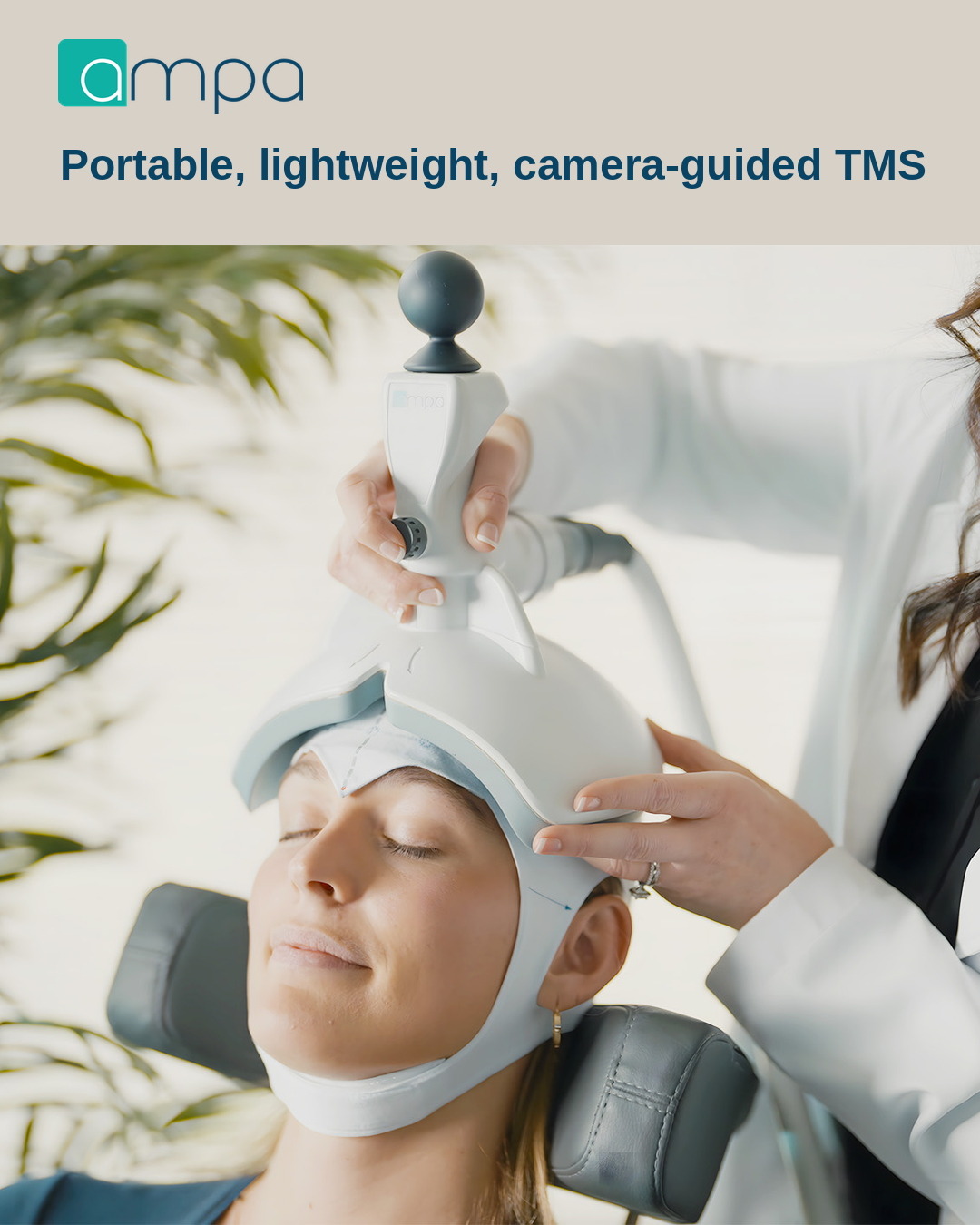
Ampa One is an FDA-cleared system for the treatment of Major Depressive Disorder in adults who have failed to achieve satisfactory improvement from prior antidepressant medication in the present episode. Built by researchers who helped pioneer the modern TMS protocol, we designed Ampa One to directly address the biggest barriers we know today’s psychiatrists are facing. That meant thinking about the entire experience—from the space the system occupies to the people who operate it to the economics.
Portability. Ampa One is suitcase-portable and can be set up for patients in less than a minute. For a practice, that means TMS doesn’t necessarily have to dictate the footprint or configuration of your space. It gives you more flexibility in where and how treatment is delivered.
Precision. Camera-guided neuronavigation supports consistent targeting and positioning without adding a complicated workflow. Ampa One also offers both an L coil for focal stimulation and an M coil for more diffuse stimulation, giving clinicians flexibility across treatment approaches.
Simplicity. Staff can become proficient with the system in a few hours. Telemedicine- native remote oversight further supports a model in which specialized expertise doesn’t have to be physically present at every treatment.
Cost. We also recognize that clinical decisions happen within a business. A physician may believe strongly in TMS and still have to ask whether the investment makes economic sense. Ampa One is available through a $3,000-per-month subscription with no upfront cost and no per-treatment fee, covering installation, operator training, replacement of worn coils, and certain software and hardware upgrades.
Ultimately, we don’t want you to have to choose between doing what is clinically compelling and what is operationally sustainable. We believe that TMS should fit into your practice; it shouldn’t require you to build your practice around it.
Accelerated treatment timelines are also changing the equation
There is another reality we hear from clinicians: time matters. It matters to patients who are trying to fit treatment into their busy schedules and it matters to physicians trying to build a sustainable clinical workflow.
Research published in Lancet by Ampa Co-Founder, Dr. Jonathan Downar, showed that a three-minute theta-burst stimulation produces the same results as the legacy 38 minute protocol. Many clinicians are still learning that this dramatic improvement dramatically shortens individual treatment sessions. With Ampa’s L-coil, a TMS session now takes approximately three minutes and nine seconds.
For clinicians, a shorter treatment isn’t simply a matter of convenience; it can change scheduling, room utilization, patient throughput and the economics of delivering TMS. It also raises a larger question: If we can make individual treatments dramatically shorter, can we rethink the treatment schedule itself?
That is the premise behind accelerated approaches such as One-Day TMS, which seek to condense what has traditionally been a weeks-long course of treatment into a much shorter period. The potential is significant, and accelerated and condensed treatments remain an active area of research.
From specialized treatment to scalable platform
As IPN recently observed at the APA Annual Meeting, the conversation in interventional psychiatry is increasingly shifting toward how to optimize, personalize and scale these treatments. This is where the future of interventional psychiatry gets exciting.
Good medicine has to work in the real world: for patients who can’t spend six weeks driving to a clinic, for psychiatrists without a spare room or extra staff, and for the practice’s bottom line.
Neuroscience is giving psychiatry an increasingly sophisticated map of the brain and interventional psychiatry is giving us new ways to act on that knowledge. The next challenge is making those interventions easier to deliver, easier to integrate and ultimately easier to scale. Ampa’s mission is ambitious: to enable one billion remissions from mental and neurological disorders. Getting there will require continued advances in science, but it will also require listening closely to the clinicians delivering that science and designing around the realities they face every day.
The science of TMS is stronger than ever. Now, we need to embrace a treatment delivery model that is strong enough to bring that science to more patients who can benefit greatly.
To learn more about Ampa, visit https://www.ampahealth.com/. To set up an Ampa One demo, visit https://www.ampahealth.com/schedule-demo.
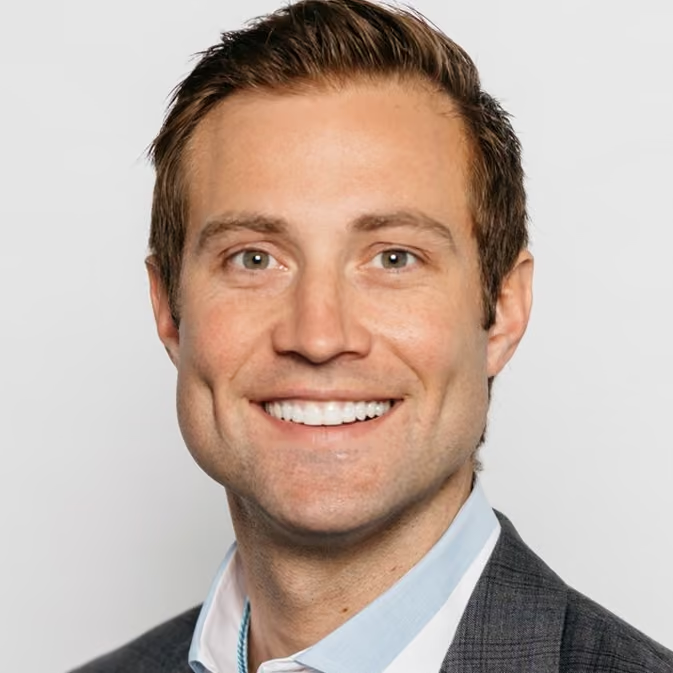
Don Vaughn, PhD, Co-founder and CEO, Ampa
Don is a neuroscientist and entrepreneur. He is CEO and Co-Founder of Ampa, which uses neuroscience, hardware, and AI to drive groundbreaking advances in brain function — with a mission to reach 1 billion remissions from neurological and psychiatric disorders in the next 10 years. His research has been featured across ABC, ESPN, TIME, The Wall Street Journal, and The Economist. His TEDx talk, “Neurohacking: Rewiring Your Brain,” has been viewed more than a million times. Don holds dual degrees from Stanford in Physics and Economics — and a Ph.D. in Neuroscience from UCLA.
Categories
Latest Articles
Join Our Email List
Sign up to receive the latest articles right in your inbox.