
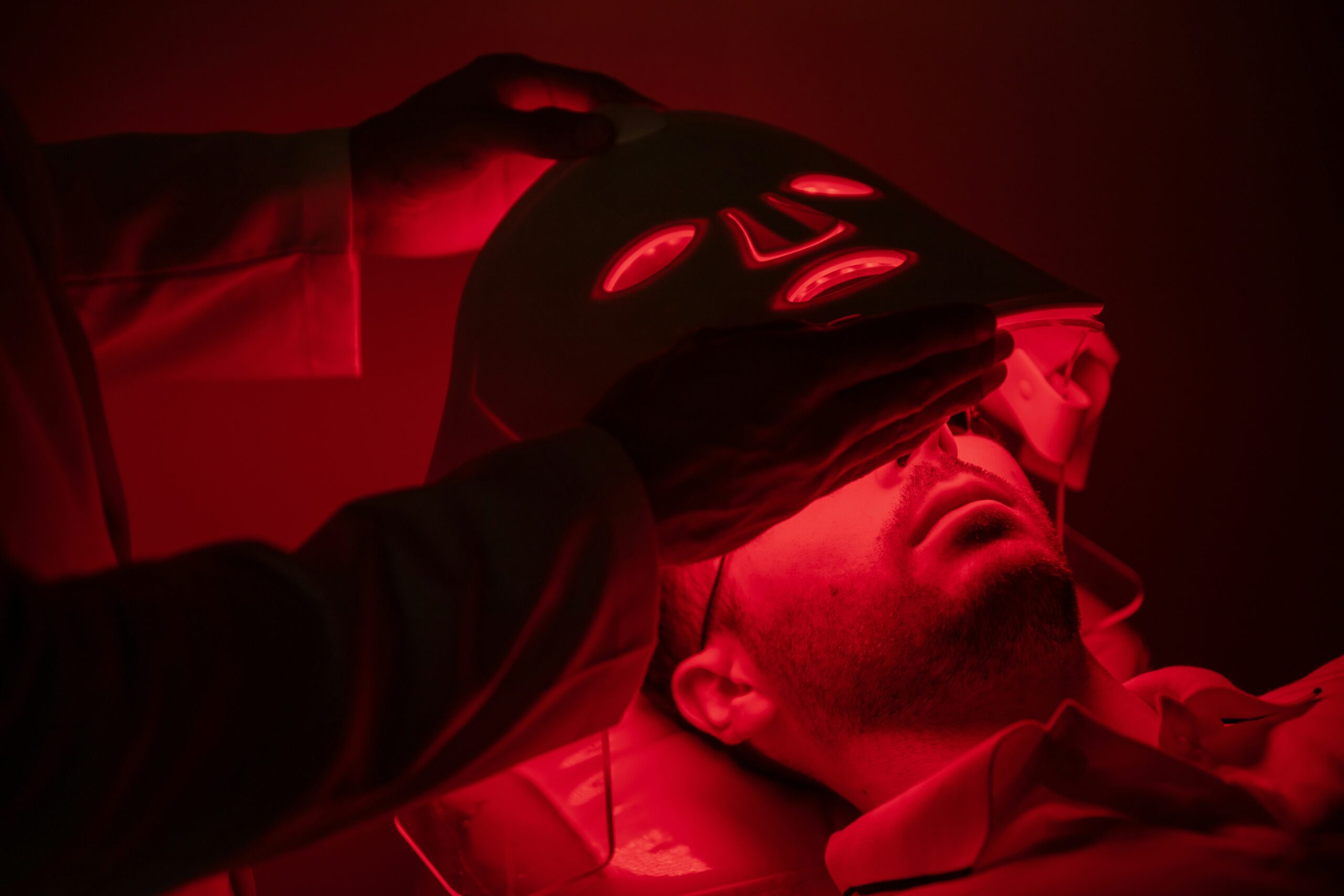
Sleep disturbances affect a large proportion of the aging population, often contributing to depression, cognitive decline, and reduced quality of life. New interventional psychiatry research continues to explore innovative ways to address these challenges. A recent randomized clinical trial investigating light therapy approaches highlights how advances in interventional psychiatry may reshape insomnia treatment for older adults.
Researchers examined whether two different forms of light exposure could improve sleep symptoms in adults aged 60 and older. The study compared traditional bright white light therapy with near infrared photobiomodulation applied to the neck, as well as a combined treatment strategy.
The findings suggest that light based interventions may offer a promising, low risk pathway for improving sleep quality in older adults while opening the door to more personalized treatment strategies.
Why Light Therapy For Insomnia In Older Adults Matters Clinically
Insomnia becomes increasingly common with age, affecting an estimated 30 to 50 percent of older adults. Chronic sleep disruption is linked to higher rates of depression, cardiovascular disease, and neurodegenerative disorders.
Standard treatments often rely on sedative medications or behavioral therapies. While these approaches can be effective, medications carry risks such as falls, daytime sedation, and cognitive impairment in older populations.
Light therapy has emerged as a non pharmacologic alternative that works by influencing circadian rhythms. Exposure to specific wavelengths of light can shift biological clocks, regulate melatonin production, and improve sleep timing.
However, most existing research has focused primarily on bright light exposure to the eyes. The potential role of near infrared photobiomodulation in sleep regulation remains far less studied.
Testing Two Types Of Light Therapy For Insomnia In Older Adults
To explore this question, investigators conducted a randomized clinical trial involving 59 community dwelling adults aged 60 years or older who experienced early awakening or sleep maintenance insomnia.
Participants were randomly assigned to one of three treatment groups:
Bright white light therapy directed toward the eyes
Near infrared light applied to the neck at 850 nanometers
A combined treatment using both approaches
Each participant received nightly treatment sessions lasting 60 minutes for two weeks.
Researchers evaluated several outcome measures, including sleep quality using the Pittsburgh Sleep Quality Index, actigraphy based sleep metrics, and salivary melatonin levels. The study also examined dim light melatonin onset and assessed participants’ chronotype, or natural sleep timing preference.
Key Findings From The Randomized Clinical Trial
Across all three treatment groups, participants reported meaningful improvements in subjective sleep quality.
Average increases in perceived sleep duration were:
0.43 hours for white light therapy
0.81 hours for near infrared therapy
1.08 hours for the combined treatment
These improvements were reflected in significant reductions in Pittsburgh Sleep Quality Index scores, indicating better overall sleep quality.
Interestingly, objective actigraphy measurements and melatonin biomarkers did not show significant changes during the short treatment period. This discrepancy highlights an important issue frequently seen in sleep research, where subjective sleep improvements may occur before measurable physiological changes emerge.
Chronotype May Shape Response To Light Therapy For Insomnia In Older Adults
One of the most intriguing findings from the study involved chronotype specific treatment responses.
Individuals with later chronotypes showed stronger improvements in sleep duration and efficiency when treated with white light therapy. In contrast, participants with earlier chronotypes demonstrated greater improvement when receiving the combined white light and near infrared intervention.
These results suggest that different light based mechanisms may interact with circadian biology in distinct ways. White light primarily influences retinal pathways that regulate the suprachiasmatic nucleus, the brain’s central circadian clock.
Near infrared photobiomodulation may act through different biological pathways, potentially affecting mitochondrial activity, cerebral blood flow, or neural signaling related to sleep regulation.
Implications For Personalized Sleep Interventions
The study contributes to a growing body of research supporting light based neuromodulation as an emerging therapeutic strategy.
From a clinical perspective, the results suggest that light therapy protocols could eventually be tailored based on an individual’s circadian profile. Rather than applying a single universal intervention, clinicians might match light based treatments to chronotype or other biological markers.
Such precision approaches align with broader trends in interventional psychiatry, where neuromodulation strategies including light therapy, brain stimulation, and photobiomodulation are increasingly being adapted to individual patient characteristics.
Although the trial was relatively small and conducted over only two weeks, the findings provide early evidence that combining different light wavelengths may enhance treatment effects for some individuals.
Future research will likely focus on longer treatment durations, objective sleep biomarkers, and potential integration with other neuromodulation therapies.
For clinicians and researchers working in sleep medicine and interventional psychiatry, these results highlight a growing opportunity to develop non pharmacological interventions that target circadian biology more precisely.
As the global population continues to age, scalable approaches such as light based therapy may become an important component of personalized insomnia treatment.
Citations
Chen PY, Chen ST, Chen YL, et al. Effects of bright light and near infrared light on insomnia symptoms in community dwelling older adults: a randomized clinical trial. Photodiagnosis and Photodynamic Therapy. https://doi.org/10.1016/j.pdpdt.2026.105425
van Maanen A, Meijer AM, van der Heijden KB, Oort FJ. The effects of light therapy on sleep problems: A systematic review and meta-analysis. Sleep Medicine Reviews. 2016. PubMed link: https://pubmed.ncbi.nlm.nih.gov/26606319/
Explore more at https://www.interventionalpsychiatry.org/
